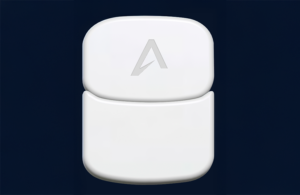
Menlo Park, California-based Adaptyx, a Stanford University spinout, shared the first data for its sensor at the American Diabetes Association Scientific Sessions (ADA 2026) in New Orleans.
The studies looked at the sensor measuring free cortisol from dermal interstitial fluid in two first-in-human studies. One looked at a controlled oral hydrocortisone challenge, in which the wearable signal tracked paired venous blood measurements. The other evaluated overnight monitoring that captured the body’s own cortisol rhythm during normal daily activity.
Adaptyx looks to measure cortisol as the hormone impacts “every major organ system,” according to Vijit Sabnis, co-founder and CEO. Sabnis says downstream effects of cortisol include diabetes, hypertension and depression.
Current clinical interpretation of cortisol is limited by tests that capture a single-time snapshot, compressing a full day into an average. The company hopes to monitor the upstream signal driving this response with its wearable device. It says that analyzing time dynamics of cortisol rhythms enables the understanding of how the hormone directs glucose release, blood pressure, heart rate, inflammation, immune activity and recovery.
Adaptyx raised $14 million to support the technology last year.
Multi-analyte sensors are becoming a hot topic in the diabetes and medtech space. Abbott recently outlined the need to measure ketones as it won CE mark for a multi-analyte sensor, while Dexcom plans for its next-generation G8 sensor to measure multiple analytes.
More about the Adaptyx sensor
The Adaptyx sensor uses a 16-channel array that incorporates eight cortisol-specific molecular switches and eight control channels. Its molecular switches comprise synthetic DNA structures that change shape when they bind a target molecule. This generates an electrical signal measurable through a wearable sensor.
Unlike conventional diagnostic assays, the company designed it for reversible molecular binding. This allows the sensor to epeatedly measure the concentration of free cortisol over time with minute-level resolution. Molecular switches can work for nearly any molecule present in dermal interstitial fluid.
The multi-channel wearable sensor enables the measurement of multiple analytes simultaneously and continuously. Adaptyx says its platform can extend continuous biosensing beyond glucose monitoring to a breadth of molecular markers. Those include hormones, small molecules, drugs and pharmaceutical compounds, electrolytes, peptides, and proteins.
Adaptyx initially has the monitor under development for adrenal disease and cardiometabolic disease. Beyond those initial aims, the company hopes to move toward other applications in which cortisol disregulation contributes to disease.
In psychiatry, the daily cortisol rhythm could provide objective biological context for depression, anxiety, PTSD, and bipolar disorder. In critical care, continuous cortisol data could track stress hyperglycemia, septic shock physiology, and post-surgical adrenal insufficiency. Pharmaceutical developers could use measurements to see whether therapies change the hormone signal before slower downstream endpoints appear.
Adaptyx also hopes to explore consumer applications, such as stress, sleep and metabolism along with optimizing exercise and athletic performance.
Details from the study
Adaptyx said its ADA data demonstrated how its device can capture the dynamic measurements as a continuous, measurable signal in humans. The study sought to see if the sensor accurately tracks cortisol when it changes and if it captures the physiological rhythms not visible with a single blood draw.
The hydrocortisone challenge with a 20 mg oral dose saw the wearable’s free-cortisol signal show concordance with paired venous blood samples analyzed by established laboratory methods. That includes liquid chromatography–tandem mass spectrometry (LC-MS/MS).
In overnight monitoring, the wearable captured the cortisol awakening response and the overnight nadir.
Adaptyx says that one of its studies anchors the sensor to blood measurements that clinicians and researchers already use. The other, meanwhile, shows the living rhythm that static tests miss.
The sensor demonstrated a limit of detection below 1 nM in artificial interstitial fluid. It also showed strong agreement across the array in the ADA studies.
Adaptyx’s human program has collected more than 400 hours of in-body monitoring data. The company said it supports its FDA submission pathway as a cortisol monitor through a Class II regulatory route.
Commentary from company officials
Sabnis said:
“Few hormones regulate as many systems at once as cortisol: metabolism, immunity, cognition, cardiovascular function, and reproductive health. Yet clinicians have had to infer its rhythm from isolated tests. Existing tests are discrete, low-temporal-resolution, and individually inadequate to characterize a hormone whose biology is fundamentally dynamic. The continuous curves we are presenting at ADA are the first steps to unlocking a window into an individual’s body rhythm and stress response. What we learn can reveal what happened before glucose spiked, before sleep was disrupted, before recovery failed, or even what happened after a therapy was given.
“By starting our journey with cortisol, we are unlocking our understanding of one of the body’s most impactful regulatory hormones and the downstream signals it shapes. The same sensing chemistry extends to other hormones and molecular biomarkers as the platform expands, and with each new analyte, the picture of what is actually happening inside the body becomes clearer and more actionable.”
Alex Yoshikawa, co-founder and chief science officer, said:
“Developing a continuous cortisol sensor represents an immense technical challenge that can’t be addressed by enzymatic-based biosensors like continuous glucose monitors. It requires a fundamentally new approach to enable continuous measurements and robust operation at physiological concentration levels more than one million times lower than glucose. Adaptyx’s breakthrough is the ability to develop a programmable DNA-based molecular switch chemistry that reversibly and specifically binds free cortisol and generates a continuous electrical signal that maintains integrity to drift, motion, tissue effects, and background noise. The ADA data show these switches deliver accurate and stable performance over multiple days in human studies.”