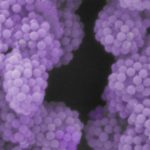
 A team of researchers from the University of Melbourne have developed a method to turn particles into “building blocks” for complex nano-structures, according to a study published in Nature Nanotechnology.
“Nano-objects are difficult to manipulate, as they’re too tiny to see directly by eye, far too small to hold, and often have incompatible surfaces for assembling into ordered structures,” lead researcher Frank Caruso said in prepared remarks. “Assembling LEGO bricks into complex shapes is relatively easy, as LEGO studs ensure the blocks stick together wherever you want. So we used a similar strategy as a basis for assembling nano-objects into complex architectures by first coating them with a universally adhesive material (a polyphenol) so that they resemble the studs on LEGO bricks. This allows for a range of nano-objects to stick together around a template, where the template determines the final shape of the assembled structure.”
The team used their approach to form a variety of materials, such as polymeric particles, noble metal nanoparticles, nanosheets, and nanocubes. The materials have structural flexibility across a wide range of length scales – from nanometers to centimenters, according to the university.
The building blocks can form complex, 3D structures because the “studs” provide a superstructuring process for assembling and interlocking the blocks.
“Many previous methods have been limited by particle-specific assembly,” Caruso said. “However, this new polyphenol-based particle approach can be adapted to different functions and allows different building blocks to be assembled into super-structures.”