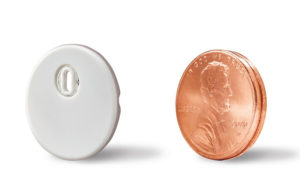
The FDA issued the letter on Jan. 23 and made it public today, Feb. 3. It relates to an inspection of Abbott’s Alameda, California, facility from Oct. 14, 2025, through Oct. 23, 2025.
According to the letter, the inspection found that the company’s FreeStyle Libre continuous glucose monitors (CGMs) produced at the facility are “adulterated” in that “the methods used in, or the facilities or controls used for, their manufacture, packing, storage, or installation are not in conformity with the current good manufacturing practice requirements.”
The FDA alleged four violations against Abbott. Abbott responded to the FDA’s claims on Nov. 14, 2025, and Dec. 19, 2025. However, the FDA deemed its responses to the alleged violations “inadequate.”
Dexcom, Abbott’s chief rival in the CGM market, faced a similar warning letter last year related to its own manufacturing practices.
The letter also comes a few months after Abbott issued a medical device correction for certain FreeStyle Libre 3 and Libre 3 Plus sensors in the U.S. The correction came as a result of an issue that led to hundreds of severe adverse events, including seven deaths. The FDA has now labeled this its most serious type of recall.
Statement from an Abbott spokesperson
“Abbott received a warning letter from the U.S. FDA related to an inspection at its diabetes care site in Alameda, California, in October 2025. We’re committed to maintaining the highest standards of quality and reliability for people living with diabetes who depend on our technology every day. We take this matter seriously and are working diligently to address the FDA’s observations.”
A look at the FDA allegations against Abbott
1. Third-party design
The FDA’s alleged violations included the failure to adequately establish and maintain procedures to ensure that the device design is correctly translated into production specifications. This includes the alleged failure to establish and maintain procedures for the design transfer of the FreeStyle Libre 3. The FDA said the design transfer process failed to ensure translation into manufacturing specifications for a third-party manufacturer.
Abbott, according to the FDA, failed to identify whether finished-device accuracy performance release testing will be performed by Abbott or contract manufacturers in its response. The FDA said the company described procedural updates. However, the agency said Abbott did not provide objective evidence demonstrating that accuracy performance requirements have been fully transferred into production specifications, incorporated into the DMR, and implemented as acceptance procedures by manufacturing entities responsible for final assembly and release.
2. Procedures for finished device acceptance
The FDA also alleged the failure to adequately establish and maintain procedures for finished device acceptance. This ensures that each production run, lot, or batch of finished devices meets acceptance criteria.
According to the letter, the inspection revealed that Abbott releases finished Libre integrated CGM devices without performance testing. The only testing takes place on unassembled sensor tails prior to final assembly, sterilization, programming, packaging and distribution the letter states. The FDA said Abbott management confirmed the absence of performance testing at product release for these devices.
Integrated CGMs work with systems like automated insulin pumps. The FDA said iCGM special controls require established manufacturing and product release controls. Inspectional evidence documents also showed that contract manufacturers responsible for final assembly and release were not provided accuracy performance specifications and were not required to verify finished-device accuracy performance prior to release.
The FDA said Abbott’s responses, including interim inspections and monitoring activities, are only temporary. Thus, it deemed them inadequate.
3. Procedures for identifying valid statistical techniques
The third allegation relates to procedures for identifying valid statistical techniques required for establishing, controlling and verifying the acceptability of process capability and product characteristics.
For this violation, the FDA says its inspection revealed a failure to establish statistically valid acceptance criteria and sampling plans. These plans ensure that only conforming finished devices reach the distribution stage.
Clinical performance monitoring used to support this process does not permit the separation of manufacturing-related sensor variability from subject-related, physiological, behavioral and reference-method variability, the FDA said. As a result, Abbott’s “in-vivo variability reflects a conflation of uncontrolled sources.” The FDA said it saw no objective evidence demonstrating the reliable partition of subject-related and sensor-related variance components.
Abbott’s response proposed sampling plans for finished-device precision testing, deployment testing, BLE communication testing and programming verification. However, the FDA said the plans failed to provide statistical justification. This includes confidence levels, power analyses, assumed defect rates or risk-based rationale.
“Your firm has not established statistically valid acceptance criteria or sampling plans and has not provided objective evidence demonstrating that proposed sampling strategies are sufficient to ensure detection of nonconforming finished devices. Therefore, FDA lacks assurance that final acceptance activities are adequate to ensure that only conforming finished devices are released,” the FDA said.
4. Conforming to defined user needs
The final violation comes in the form of the failure to adequately establish and maintain design validation procedures to ensure that devices conform to defined user needs and intended uses. This includes testing of production units under actual or simulated use conditions.
According to the FDA, the inspection revealed the failure to validate an appropriate manufacturing and release control that ensures the preservation of the validated performance of some sensors. For instance, the Libre integrated CGM previously complied with accuracy performance requirements during premarket review. However, the FDA claims Abbott has no validation process in place to maintain that validated performance.
The FDA said Abbott’s interim monitoring activities and proposed future testing fail to provide objective validation evidence.
Final statement from FDA
“Your firm should take prompt action to address any violations identified in this letter,” the FDA said in its letter. “Failure to adequately address this matter may result in regulatory action being initiated by the FDA without further notice. These actions include, but are not limited to, seizure, injunction, and civil money penalties.”