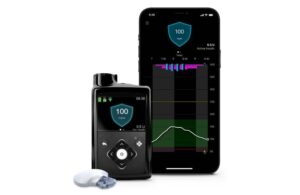
Class II recalls constitute a situation in which use of, or exposure to, a violative product may cause temporary or medically reversible adverse health consequences or where the probability of serious adverse health consequences is remote. MiniMed is not removing its devices. The company received no complaints or reports about this issue, which constituted a notification only, so no product replacement is required.
The former Medtronic Diabetes business just completed its initial public offering (IPO) and recently launched its latest-generation pump, the MiniMed Flex. However, the company has recently contacted customers to warn them of potential issues related to its 780G, 770G and 700 Series pumps.
On Feb. 13, 2026, the company began communicating the potential issues to customers. All pumps (including Paradigm series, 600 series, and BLE 700 series systems) were found to be affected by unintended over- and under-delivery of insulin. This may occur with the pump when elevated or lowered relative to the infusion site.
According to Medtronic, changes in gravitational force impact hydrostatic and hydrodynamic pressures. Insulin over-delivery may occur with the elevation of the pump relative to the infusion site. That can result in severe hypoglycemia, altered mental status, seizure, coma or death.
Under-delivery can occur at lowered pump height conditions relative to the infusion site. This can lead to severe hyperglycemia, dehydration, diabetic ketoacidosis, or death.
MiniMed began communications via email, SMS, certified postal mail and in-app push notifications to customers. The company instructed users to keep the location of their pump stable relative to the infusion site. They should not wear the pump more than 14 in (35.5 cm) above your infusion site.
According to the FDA, MiniMed currently has 453,144 780G pumps, 95,704 770G pumps and 13,811 700 Series pumps in commerce.
This article and its headline previously stated that the FDA action included three separate recalls. The action pertained to one recall covering multiple pumps. This article has now been updated.