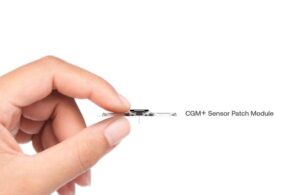
Dublin, Ireland-based Trinity Biotech unveiled its CGM+ next-gen wearable biosensor last month. With CGM+, the company aims to take on the growing AI wearables market. The company said it has the system in the later stages of device development. The new AI-native CGM combines multi-sensor data with real-time analytics to meet the evolving demands of AI-powered healthcare and wellness.
According to Trinity Biotech, clinical trial outcomes demonstrated “a major technical breakthrough,” de-risking its commercial pathway. Data confirmed that the redesigned, proprietary, needle-free sensor delivers accurate readings across a 15-day wear period. It achieved this without the need for fingerstick calibration while reducing disposable components, lowering the costs of care.
Unlike traditional CGMs focused solely on glucose monitoring, Trinity says CGM+ offers a variety of measurements. It combines an ultra-thin, minimally invasive electrochemical glucose sensor with the monitoring of heart activity, body temperature and physical activity, all within one sleek, user-friendly, modular wearable device.
The trial data confirmed that the system offers enhanced user convenience, comfort and reliability, Trinity says. It believes the clinical validation marks a critical step toward commercializing the platform.
“This milestone represents the most significant technical achievement since we began redevelopment of our acquired CGM technology,” said John Gillard, CEO of Trinity Biotech. “The elimination of the requirement for finger-stick calibration was achieved through a combination of sensor design modifications, refined signal processing, and proprietary enhancements to sensor operation. With this, we’ve successfully addressed the most uncertain technical hurdle and brought our glucose sensor in line with the standards of market leaders — but critically with a highly differentiated product architecture that promises to be more affordable, reusable, and sustainable while also supporting the single device integration of heart activity, body temperature and physical activity data.”