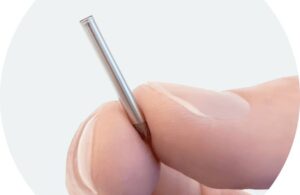
Where some have tried and failed, Vivani Medical believes its drug-delivering implants can go the distance.
When Second Sight Medical and Nano Precision Medical merged last year, the rebranded company — Vivani Medical (Nasdaq:VANI)— had a goal: bring a six-month, subdermal drug delivery implant that treats conditions including type 2 diabetes to market.
CEO Dr. Adam Mendelsohn leads the way for the developer of the proprietary NanoPortal technology. His experience in drug delivery and diabetes technology goes back to his high school days.
Mendelsohn first interned at insulin pump maker MiniMed, which Medtronic eventually acquired. He moved on to a company developing implantable morphine delivery pumps for pain management. Boston Scientific ultimately acquired that company.
Then came PhD work on transplanting pancreatic beta cells that could produce insulin for patients with type 1 diabetes.
Mendelsohn co-founded Nano Precision Medical in 2009 and has been in charge as CEO since then. Along what he calls his “incredible journey,” the company has moved closer to bringing its innovative technology to the diabetes space.
“We’re really excited about the opportunity to improve medication adherence, which we think is one of the biggest challenges facing chronic disease patient outcomes,” Mendelsohn told Drug Delivery Business News. “It can be addressed very squarely with the technology that we’re developing.”
About the Vivani Medical NanoPortal technology
Vivani designed its proprietary NanoPortal implant technology to steadily deliver medication over extended periods of time.
The company aims to guarantee correct doses for patients while avoiding potential safety concerns around fluctuating drug release profiles. The technology can also deliver large hydrophilic molecules, including peptides and proteins. The company believes this enables a broader range of therapeutic applications.
Vivani’s targeted conditions for this technology include type 2 diabetes, non-alcoholic steatohepatitis (NASH) and obesity.
The company’s lead product candidate, NPM-119, is a drug-device combination for diabetes treatment. The miniature, subdermal implant is placed in a patient by a healthcare professional during an outpatient procedure. For up to six months, it can provide steady doses of exenatide.
The GLP-1 receptor agonist helps the patient produce more insulin when blood sugar levels are high. However, if levels are normal or low, it does not increase insulin production, avoiding the risk of hypoglycemia associated with insulin over-delivery.
Delivery through the NanoPortal technology will hopefully free patients from the hassles of daily pills or weekly injections.
“Once every six months, you go in, you get your implant as part of your normal visit,” Mendelsohn said. “In between visits, the patient and the caregiver can be confident that their patient is getting at least their GLP-1 medicine during that time. Maybe there are other medicines they have to remember, but it will reduce the overall treatment burden and — we think — have a compelling effect on patient outcomes, in addition to a compelling effect on healthcare costs.”
Learning from the Intarcia story
Intarcia Therapeutics was at one point seen as a potential game-changer in diabetes. The company was developing a type 2 diabetes drug and a proprietary implant for delivery. Mendelsohn said that the six-month GLP-1-delivering implant was about twice the diameter and length of Vivani’s.
Intarcia was once valued at more than $5 billion by investors. But despite the hype, the FDA refused to allow Intarcia’s ITCA 650 on the market. Trials identified that it might cause acute kidney issues. There were also some production challenges.
Intarcia received a lifeline last month when the FDA allowed it to request a public advisory committee hearing after two previous rejections. Mendelsohn said that development was exciting as Vivani aims to make its own dent in the market.
Among the advantages Mendelsohn said the company may have over Intarcia’s offering are the smaller size of the implant and its needle and steady release rate.
“We’ve seen the world really support the development of a six-month exenatide implant,” he said. “There are no fluctuations. We’ve been able to measure at time scales of two-and-a-half hours and show that the release rate doesn’t change. That is one of the critical differentiators and advantages and the reason why we are optimistic that, even if Intarcia doesn’t end up succeeding, we have a path to approval with this product.”
What’s next?
Vivani’s future plans include a Phase 2 study of patients with type 2 diabetes on GLP-1 treatment. The company expects the trial to compare patients switched to its implants with Bristol Myers Squibb’s Bydureon once-weekly exenatide injection.
This trial can help understand day-to-day fluctuations in pharmacokinetics. That could represent an important aspect potentially allowing Vivani to pursue the FDA 505 (b)(2) pathway to avoid a pre-approval outcomes study.
“Depending on results — if they’re successful — we’ll be looking at a future study … and that could be a pivotal study,” Mendelsohn said. “We’re optimistic that after this upcoming 12-week trial, we’ll be able to have a path to approval with what could be a 26-week trial with hundreds of patients.”
The company can’t put an overall timeline on a potential push to market, but it could be much shorter than typical cases, Mendelsohn said.
Vivani has a leadership team in place prepared for the next steps, including manufacturing processes, and Mendelsohn expects good times ahead.
“We’re really excited about what we’re doing with this new technology,” Mendelsohn said. “Once we get into this trial, I think we’re going to be the first ones with a nanoporous membrane-based delivery technology to be evaluated in a clinical study. We’re very excited about the value that can be generated and the demonstration of the technology which we expect to ultimately apply elsewhere.”