Many people with diabetes today use continuous glucose monitors (CGMs) to keep track of their glucose levels. Those devices still have a small, minimally invasive interstitial needle inserted into the body when applied and don’t exceed a wear time of 15 days. Some people with diabetes still use the traditional fingerstick method, requiring them to draw blood from their fingers several times per day to check their glucose.
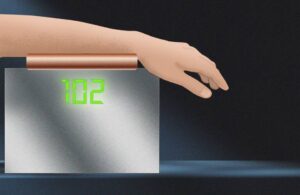
Using Raman spectroscopy, the MIT team may have found an alternative. This technique reveals the chemical composition of tissues by shining near-infrared or visible light. The team centered its shoebox-sized device around this method to measure blood glucose levels without any needles.
According to MIT, the researchers tested their method on a healthy volunteer. They found that measurements were similar to those obtained by a commercial CGM. While the device evaluated in this study remains too large to work as a wearable sensor, the researchers say they developed a wearable version now under evaluation in a small clinical study.
“For a long time, the finger stick has been the standard method for measuring blood sugar, but nobody wants to prick their finger every day, multiple times a day. Naturally, many diabetic patients are under-testing their blood glucose levels, which can cause serious complications,” said Jeon Woong Kang, an MIT research scientist and the senior author of the study. “If we can make a noninvasive glucose monitor with high accuracy, then almost everyone with diabetes will benefit from this new technology.”
MIT postdoc Arianna Bresci served as lead author of the study, which appeared in the journal Analytical Chemistry. Other authors include Peter So, director of the MIT Laser Biomedical Research Center (LBRC) and an MIT professor of biological engineering and mechanical engineering; and Youngkyu Kim and Miyeon Jue of Apollon Inc., a biotechnology company based in South Korea.
More about the non-invasive glucose measuring technology
MIT’s researchers sought to create wearable glucose monitors that offer more comfortability for patients. They reached a breakthrough with Raman spectroscopy. Despite glucose signals normally being too small to discern from other signals generated by molecules in the tissue, the team found a way to filter out the unwanted signal through the use of near-infrared light. They shine it on the skin at a different angle from which they collect the resulting Raman signal.
The researchers obtained their first measurements using equipment around the size of a desktop printer. Since, they’ve managed to shrink their equipment. In their latest study, they created a smaller device by analyzing just three bands in the Raman spectrum, which can typically contain around 1,000 bands. One band comes from glucose, plus two from background measurements. The approach enabled them to reduce the amount and cost of the equipment needed.
Over a four-hour period, the team rested the arm of their healthy volunteer on top of the device. A near-infrared beam shone through a small glass window onto the skin to perform the measurement. Each measurement takes a little more than 30 seconds. The researchers took new readings every five minutes.
During the study, the volunteer consumed two 75-gram glucose drinks. This enabled the researchers to monitor the changes in glucose concentration, observing similar levels of accuracy between their technology and two commercially available CGMs also worn by the subject.
Now, the researchers have an even smaller prototype in testing, about the size of a cellphone. Next year, they plan to run a larger study with a local hospital to include people with diabetes. Ultimately, they hope to minimize the device even further, to about the size of a watch. They also want to ensure the device can obtain accurate readings from people with different skin tones.