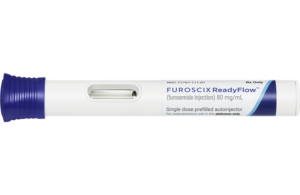
In addition to the funding, the company — which also develops inhaled insulin technology — won FDA approval for the Furoscix ReadyFlow auto-injector.
MannKind said it entered into a securities purchase agreement in connection with a private placement to certain institutional investors. It expects to close the financing on or about today, July 24, with proceeds of approximately $50 million. Frazier Life Sciences led the private placement.
The company plans to use the net proceeds for general corporate purposes. That includes funding a $45 million contingent value rights payment triggered by the Furoscix ReadyFlow approval.
Furoscix ReadyFlow (furosemide injection) received the FDA’s green light for the treatment of edema (fluid overload) in adults with heart failure (HF) or chronic kidney disease (CKD). The at-home treatment helps adults with HF or CKD address fluid overload earlier, before symptoms worsen. It provides a full 80 mg/mL dose in a simple, patient-friendly format in under 10 seconds. Therapy gets absorbed into the bloodstream and symptom relief may begin in an hour or less.
The technology adds to the company’s Furoscix portfolio, which also includes an on-body infusor. That technology won FDA approval for adult patients with edema in HF in 2022 and CKD in 2025, with expanded approval for pediatric use taking place at the end of last year.
MannKind picked up the Furoscix offerings through its August 2025 acquisition of scPharmaceuticals.
Michael Castagna, MannKind CEO, said:
“The approval of Furoscix ReadyFlow marks an important milestone for patients living with heart failure or chronic kidney disease who experience fluid overload. By combining IV-equivalent diuretic performance with the simplicity of an autoinjector, Furoscix ReadyFlow has the potential to advance how fluid overload is managed outside traditional care settings and reach appropriate patients at different intervention points—from the onset of worsening symptoms and, when hospitalization cannot be avoided, through the transition home. We believe this represents a meaningful step forward for patients, practitioners, payers and hospitals—helping ease fluid burden for patients while reducing pressure on an increasingly burdened healthcare system.”