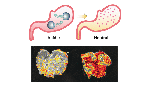
 Researchers have developed tiny ‘submarines’ that speed through the stomach using gastric acid for fuel. The proton-driven micromotors have a pH-sensitive polymer coating that can be loaded with drugs and released in the stomach.
Gastric acid can be destructive for orally-administered, pH-sensitive pharmaceuticals, including antibiotics. Although some coatings can protect substances from gastric acid, they can also prevent drugs from being activated in the stomach. Proton pump inhibitors, which block production of acid, can cause adverse side effects in patients if used for a long period of time.
A team of researchers have created micromotors that neutralize gastric acid and release its cargo when surrounding fluids reach a certain concentration of acid.
The team, led by Liangfang Zhang and Joseph Wang from the University of California, San Diego, published their work in the journal Angewandte Chemie.
To construct the motors, researchers coated magnesium spheres with a nanolayer of gold and a pH-sensitive polymer, into which they embed a drug. A small spot on the magnesium core remains uncoated, facilitating an electrochemical reaction which consumes protons and forms magnesium ions. Tiny bubbles of hydrogen gas propel the motors, mixing liquid and speeding up the reaction.
Less than 20 minutes after the researchers administered the motors, the stomach environment reached a neutral pH, according to the team.
When the motors reach an environment with a neutral pH, the polymer dissolves and releases the payload. The motors also penetrate into the gastric mucosa, ultimately increasing the amount of time that the drug is retained in the stomach.
The researchers noted that the micromotors are biocompatible, safe to use, and that normal pH levels are re-established within 24 hours.