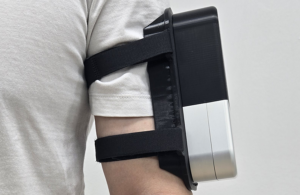
Boston-based Apollon and MIT’s Laser Biomedical Research Center (LBRC) published their findings from the peer-reviewed clinical study in the Journal of Diabetes Science and Technology. Outcomes demonstrated that a compact, non-invasive CGM device based on band-pass Raman spectroscopy achieves clinical accuracy statistically comparable to needle-based leading CGMs from Abbott and Dexcom. However, this device features no skin insertion, no adhesive patch and no consumables.
The shoebox-sized device probes glucose molecules in the interstitial fluid transdermally using three ultra-narrow Raman bands. It eliminates the need for bulky spectrometers, enabling a compact, low-cost design without sacrificing sensitivity. Unlike conventional CGMs that require constant sensor replacement, Apollon’s approach requires no consumables over the device lifetime.
Arianna Bresci of MIT’s LBRC led the study with co-authors Youngkyu Kim and Miyeon Jue of Apollon, Peter T.C. So and Jeon Woong Kang of MIT’s Departments of Biological and Mechanical Engineering, and Lorenza Pia Foglia and Elyse Moores, who contributed as research interns with Apollon.
Read more about the band-pass Raman spectroscopy-based device at Medical Design & Outsourcing.
Findings included a mean absolute relative difference (MARD) of 11.3. This proved “statistically indistinguishable” from the latest-generation Abbott FreeStyle Libre 3 and Dexcom G7 CGMs, Apollon said.
The CGM also delivered an agreement rate (20/20) of 87.35%, falling in line with the FDA’s performance criteria for CGM devices. All readings (100%) landed within the clinically acceptable zones of the Parkes Consensus Error Grid. Researchers reported near-zero measurement bias of 0.29 mg/dL, compared to -7.31 mg/dL (Abbott) and 6.57 mg/dL (Dexcom). Additionally, they saw zero adverse skin reactions following 4.5 hours of laser exposure.
Building on its findings, Apollon now plans a clinical feasibility study at Boston Medical Center (BMC) in the second half of 2026. It expects the study to expand validation to a broader population of patients with diabetes and advance its FDA pathway.
Commentary from Apollon officials and MIT researchers
Aram Hong, founder and CEO of Apollon, said:
“Matching the accuracy of cleared devices without touching the skin is exactly the milestone we built toward. We are now preparing the next stage of validation at Boston Medical Center, with a more advanced device, and moving forward on our FDA regulatory strategy.”
Kang, the study’s corresponding author and a core collaborator of Apollon’s ongoing research program at MIT, said:
“This is a meaningful clinical milestone for both teams. By targeting only three Raman bands instead of a full spectrum, we have shown that clinical-grade glucose monitoring is achievable with compact, low-cost instrumentation. This opens a real path toward a wearable, needle-free device.”