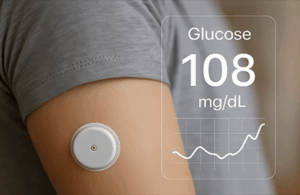
Millions of people worldwide are looking for ways to manage their diabetes. That’s where the continuous glucose monitor (CGM) comes in.
The CGM market is expected to experience substantial, double-digit percentage growth over the next five years, reaching nearly $29 billion by 2030.
Market leaders Abbott and Dexcom continue to establish their hold on the market, but a wide range of entrants with many different types of technologies are vying to take their own share.
Our Medtech Market Special Report features a detailed market forecast, including CGM sales growth forecasts for the individual companies in the space. This extensive report includes epidemiology data, clinical overview, medical device technologies and innovations, historical sales and forecast markets, growth rates by region (U.S. and international), competitive analysis/market share, leading competitors and emerging startups, corporate strategies, market drivers and limiters, and trends/opportunities. Chrystal Larsen, a veteran medtech market analyst, produced this report.
Visit here to purchase the report.
To accompany the report, we’ve collected the biggest CGM stories of 2025 so far.
5. Glucotrack is advancing a 3-year monitor
Glucotrack believes it can tap into a diabetes market that includes millions of people who aren’t being served completely.
Rutherford, New Jersey-based Glucotrack is looking to enter the fiercely competitive continuous glucose monitor (CGM) market, but with something different from the options out there. Abbott and Dexcom lead the way with minimally invasive devices that measure interstitial fluid over a wear time of around a couple of weeks, depending on the device. Senseonics is the most similar in the sense that it is implantable, with its Eversense 365 lasting for one year.
However, Glucotrack believes it has something unique to offer. Its device features no on-body external component. The company designed it for three years of continuous, accurate blood glucose monitoring for a more convenient, less intrusive solution. Unlike traditional CGMs that measure glucose in interstitial fluid, the CBGM measures glucose levels directly from the blood. It aims to provide real-time readings without the lag time typically associated with interstitial glucose measurements.
Earlier this year, the company completed the first-in-human study of the system. It shared findings from that study, which met all endpoints, at ADA.
Read the full story from a presentation by Chief Scientific Officer Mark Tapsak at ADA 2025 here.
4. Senseonics inks first automated insulin delivery partnership
In April, Sequel Med Tech and Senseonics announced a commercial development agreement to combine insulin delivery and glucose monitoring systems.
The companies plan to integrate Sequel’s twiist automated insulin delivery system with the Senseonics Eversense 365 continuous glucose monitor (CGM). This collaboration would make twiist the first AID system compatible with Eversense 365, the world’s first and only one-year CGM.
Senseonics brought the first year-long CGM to market last year, launching Eversense 365 with its global distribution partner, Ascensia Diabetes Care, in October 2024. The system also received clearance as an integrated CGM (iCGM) system, meaning it can work with compatible medical devices. Those include insulin pumps as part of automated insulin delivery systems.
The company also recently agreed to end its distribution deal with Ascensia Diabetes Care, taking over commercialization efforts for its products.
Read the full story on Eversense 365’s first insulin pump integration here.
3. Biolinq wins FDA nod for needle-free, non-invasive CGM
Biolinq announced in September that it received FDA de novo clearance for its lead product, the Biolinq Shine wearable biosensor.
The first-of-its-kind system utilizes a patch on the forearm to provide real-time glucose feedback through a primary color-coded LED display, visible with or without a phone. Users can access additional insights for activity and sleep trends through a mobile app.
Unlike filament-based continuous glucose monitors (CGMs), Biolinq Shine doesn’t require a subcutaneous introducer needle for placement. It uses a microsensor array manufactured using state-of-the-art semiconductor technology. The company says this registers up to 20 times more shallow than conventional CGM needles.
San Diego-based Biolinq can now scale its new generation of wearable sensors designed for comfort, simplicity and global reach. Its Shine sensor integrates glucose, activity and sleep information into a single device with autonomous operation. The company plans to initially market the device to people with type 2 diabetes not dependent on insulin.
Read the full story about Biolinq’s milestone clearance here.
2. Roller coaster 2025 at Dexcom
It’s been an up-and-down year on the CGM front at times for Dexcom, which has faced some scrutiny from regulatory bodies and investors.
The company began the year dealing with an FDA warning letter related to observed non-conformities in its manufacturing processes and quality management systems. It also now faces a class action lawsuit from users alleging issues with its latest-generation G7 CGM.
Drug Delivery Business News‘ most-read story of this year, though, was on the company’s Class I recall related to components for its Dexcom One and One+ offerings and the G6 and G7 CGMs. The recall came as a result of a potential issue with the receiver component, centered around defective foam or an assembly error that may cause the receiver speaker to lose contact with the printed circuit board.
However, the company also had highs across 2025, including an FDA nod for its 15-day CGM and a significant expansion of its Stelo over-the-counter CGM partnership with Oura.
All of this has also occurred amid transition, with the planned promotion of COO Jake Leach to CEO. He took over in an interim capacity in September when CEO Kevin Sayer took a leave of absence.
Read the full story about Dexcom’s Class I recall here.
1. Medtronic/Abbott sensor
Medtronic announced in September that its Instinct sensor, made by Abbott, is now available to order with the MiniMed 780G pump.
The medtech giant’s diabetes unit — one of the largest diabetes tech businesses in the world — earlier this month picked up FDA clearance for its SmartGuard algorithm as an interoperable automated glycemic controller (iAGC). This enables integration with a sensor made by Abbott, designed specifically through a landmark collaboration between the companies.
Medtronic unveiled the Instinct sensor designed specifically for its systems in August. Built on the Abbott FreeStyle Libre platform, Instinct reflects “the power of the partnership,” Abbott EVP, Diabetes Care, Chris Scoggins, told Drug Delivery Business News earlier this year.
Elsewhere, Abbott has also hit a number of milestones with its sensors over the course of the year, including advances on a dual glucose/ketone sensor and new retail agreements for its Lingo over-the-counter CGM.
Read the full story on Medtronic and Abbott’s landmark launch here.
Visit here to purchase our Medtech Market Special Report on CGMs.