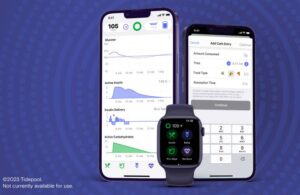
Palo Alto, California-based Tidepool is a non-profit diabetes data management group. It developed the FDA-cleared Tidepool Loop, a “do-it-yourself” (DIY) AID system. The hybrid, closed-loop AID app has compatibility with multiple insulin pumps and continuous glucose monitors. Recent collaborations include integrations with Abbott and Sequel Med Tech, among others.
The company shared real-world data and research related to closing gaps in women’s health. It presented outcomes at the American Diabetes Association Scientific Sessions (ADA 2026) in New Orleans. It says findings demonstrate sustained progress in the adoption of accessible, data-driven diabetes management.
Tidepool co-founder and CEO Brandon Arbiter said:
“At Tidepool, we are looking for ways to make the biggest impact for our users and the broader diabetes community. These discussions at the American Diabetes Association bring together innovators, clinicians, and those of us living with diabetes to advocate for new developments that transform how we interact with our health data every day. Our focus remains on proving how data can be harnessed to create a more personalized, equitable ecosystem for everyone.”
Tidepool tech helps in resource-limited care
Tidepool said one presentation centered around data-driven diabetes management in historically underserved communities.
In a presentation at ADA, Dr. Sushma Reddy shared results from a 24-week Diabetes Care Management Program (DCMP). It looked within a resource-limited healthcare setting supporting adults with uncontrolled type 2 diabetes. Investigators used continuous glucose monitoring (CGM) data streamlined through Tidepool’s TIDE clinical dashboard.
The study used a remote patient monitoring framework. The care team efficiently prioritized weekly outreach to patients requiring immediate support or education. They achieved a 1.59% reduction in HbA1c and a 13.4% increase in time in range.
“We’ve shown that we can change the trajectory of care in patients with diabetes, even in some of our most challenged safety-net environments,” said Reddy. “By engaging these patients through CGM and providing tools that allow clinicians to quickly identify who needs immediate follow-up, providers can drive meaningful improvements without exhausting limited resources.”
Taking on women’s health
Tidepool also said it aims to drive a critical conversation around gender equity in diabetes research. Director of Product Design and User Experience, Maya Friedman, outlined the company’s goals for improving women’s health in patients with diabetes.
Friedman shared initial results from menstrual cycle research conducted in partnership with Diabetes Center Berne. Additionally, she outlined Tidepool’s aims for a new initiative launched at last year’s Milken Institute Women’s Health Network event.
In collaboration with Oura and other health leaders, Tidepool hopes to build the largest available opt-in, anonymized dataset of biometric and diabetes device data.
“For too long, the unique lifecycle stages of women have been underrepresented in diabetes care,” said Friedman. “By capturing this multi-signal dataset, we can provide the objective evidence needed to design targeted therapies and technologies for women navigating everything from menstrual cycles to menopause.”
Expanding AID evidence in meal management
Tidepool says that, with the burden of meal logging, it teamed up with Stanford University and Replica Health on a collaborative study. They evaluated how personalized meal records could improve glycemic control while reducing manual steps for AID users.
The study took place over a 40-day period of meal-logging behavior from a mix of participants who self-identified as using accurate, mixed, and approximate meal-logging strategies. Data associated repeated meals with better postprandial glycemic outcomes, even when carb-counting is approximate or inconsistent.
“Our roadmap for Tidepool Loop is focused on lifting the burdens for people living with diabetes, and meal logging is one of the heaviest,” said Kelly Watson, chief product officer. “This study demonstrates another opportunity to move beyond the demand for constant precision. By harnessing an individual’s real-world data, we have a clear opportunity to advance AID systems and deliver deeply personalized experiences.”