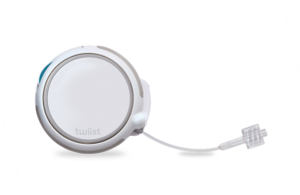
Sequel Med Tech has a habit of making waves at the American Diabetes Association’s annual Scientific Sessions event.
In 2024, the Manchester, New Hampshire-based company was generating buzz following its entry into the automated insulin delivery market with twiist, its pump system, which had garnered FDA clearance in March of that year.
At last year’s edition, the company announced plans to begin the launch of the highly anticipated twiist system.
This year, at the event that took place over the past few days in New Orleans, Sequel built on the full launch of twiist for type 1 diabetes in March with clinical findings supporting the system’s use in the type 2 diabetes population.
In an email Q&A conducted during this year’s ADA Scientific Sessions, Sequel Med Tech Chief Medical Officer Dr. Joanna Mitri explained the road to bring twiist to where it is now and what lies ahead.
Drug Delivery Business News: It’s been a fairly busy year for Sequel, including Eversense 365 integration and partnerships with Arecor and Diabeloop, building up to the full twiist launch. Since ADA last year, when the company shared news of its initial rollout, what have the last 12 months been like?
Dr. Joanna Mitri: “The last 12 months have been nothing short of extraordinary for Sequel and for the diabetes community we serve. Since ADA 2025, we have been on a deliberate and purposeful path to ensure that when twiist reached nationwide availability, it would offer something truly differentiated, not just in technology, but in the range of choice it provides to people with diabetes and the clinicians who care for them.
“That started with announcing our first CGM integration with Abbott’s FreeStyle Libre 3 Plus, followed by our agreement with Abbott to integrate Abbott’s future dual glucose-ketone sensor, an opportunity to fundamentally change how people with T1D detect and respond to rising ketones. We then launched the first-ever AID system compatible with Senseonics’ Eversense 365, the world’s only one-year implantable CGM, giving users a genuinely unique option to dramatically reduce the burden of frequent sensor changes. And in January 2026, we announced our partnership with Diabeloop to integrate their FDA-cleared DBLG2 algorithm into twiist, marking a meaningful step toward expanded algorithm choice and customer experience.
“The Arecor co-development agreement further underscores our commitment to looking at diabetes management holistically: from the insulin itself to the system delivering it. And then, in March 2026, we achieved nationwide availability of twiist. Each of these milestones reflects our core mission: giving people with diabetes more choice and a more personalized, customizable AID experience to help achieve what matters most to them.”
Following the full launch of twiist earlier this year, how would the company describe the experience of the first few months of the system’s availability in the U.S.?
Mitri: “It has been an incredibly meaningful few months, both as a company and on a deeply personal level for many of our team members, a number of whom live with T1D themselves or are caregivers for someone who does. To see a technology this innovative reach people across the country has been humbling and energizing in equal measure.

“What has struck us most is how quickly twiist has resonated. twiist is a system designed to fit into people’s lives. Diabetes takes a mental and emotional toll, not just a physical one — and that burden is too often overlooked.
“twiist Loop algorithm is powered by the community-developed Tidepool Loop, originally designed with the input of people with diabetes, and built to adapt to how individuals actually live. Hearing from users that the system genuinely fits into their lives, and not the other way around, is exactly what we set out to achieve.
“The interest since launch has been energizing. We’ve seen more than 450k unique visitors to our website, which tells us that the twiist has certainly captured the attention of the T1D community. The recognition of twiist in the 2026 MedTech Breakthrough Awards as winner of the Best New Technology Solution in Diabetes Management is a further validation of the innovation we’ve brought to market.”
What has the patient/user/provider feedback been like during this period?
Mitri: “The experience so far has been encouraging, and the feedback has been largely anecdotal. What we hear from people with diabetes is that they can customize it to how they live, and that it’s taking on more of the day-to-day work for them. Specific features have resonated, and the sense we get from the type 1 community we serve today is that the system is meeting them where they are.
“From providers, the experience has been similar from a different vantage point. Clinicians tell us they value the flexibility and choice, a system that works across different sensors and lets them personalize to the individual in front of them.
“We treat all of this as input, rather than endorsement; it shapes where we focus next, and we’re careful to let the evidence speak for itself rather than getting ahead of it.”
What are some of the main takeaways or favorite/most unique features of twiist that have been singled out by patients as providing new benefits in their diabetes management? For example, rapid occlusion detection…
Mitri: “A few features come up again and again. One is the flexibility to adjust carb entries retroactively, we know plans change and meals don’t always go as expected, so users can go back and update the carb count they gave the pump after the fact.

“twiist also gives users and their care teams a customizable glucose target. Before a meal, a single button lowers the target, so insulin is on board before the first bite, designed to reduce the need to pre-bolus and help blunt post-meal highs. More broadly, the target can be tailored to the individual rather than a one-size-fits-all setting, including the flexibility to set a correction target as low as 87 mg/dL when it’s clinically appropriate.
“The system is also built to catch some problems early; for example, rapid occlusion detection with user notification was designed to help limit prolonged interruptions in insulin delivery.
“Across all of these, the goal is the same: helping people feel more confident in their day-to-day type 1 diabetes management, with the system quietly taking on more of the work, which is exactly what we set out to build.”
Are there any specific trends in diabetes and insulin delivery that Sequel is currently targeting or looking to build on?
Mitri: “The biggest trend we’re building around is choice. For a long time, diabetes technology companies have asked people to fit into a single, closed system, we think the future is the opposite: an interoperable ecosystem where people with diabetes and their care teams can choose the components that work best for them, rather than being locked into one configuration.
“For us, that shows up in a few ways: designing twiist to be compatible with more than one CGM, offering flexibility in the control algorithm, and our agreement to integrate Abbott’s dual glucose/ketone sensor. We’re also looking at the insulin side of the equation, including an early-stage collaboration with Arecor in concentrated and rapid-acting insulin, because we believe meaningful innovation has to happen across the whole system, not just one component.
“Underneath it all is the same goal: meeting people where they are, and letting the technology adapt to the person rather than the person adapting to the technology.”
Is there anything else Sequel is excited about or looking forward to in the future?
Mitri: “First, we’re as committed as ever to the type 1 community , the people twiist serves today. A lot of what we’re excited about is continuing to make their everyday experience better: more flexibility, more personalization, and a system that keeps taking on more of the work.

“At the same time, we’re motivated by how many more people we might be able to help in the future. Many people who rely on insulin live with type 2 diabetes, and that community has historically been underserved by automated insulin delivery. We have done investigational work with the T2D community to build the evidence in order to support a future indication. Expanding our indications to allow for more people who depend on insulin to have access to this kind of technology is an important focus for us.
“Underneath all of it is the same goal: an interoperable system that gives people real choice across sensors, algorithms, and insulins, so that, whoever you are, the technology adapts to you and asks less of you.”
Closing thoughts?
Mitri: “If there’s one thing I’d leave people with, it’s that we’re building twiist around a simple belief: the technology should adapt to the person, not the other way around.
“We’re as committed as ever to the type 1 community that twiist serves today, and a lot of our energy goes into continuing to make their everyday experience better. At the same time, we’re motivated by how many more people we might be able to help
“We’re proud of where we are, but mostly we’re excited about what’s ahead, and grateful to the people and clinicians who are helping us get there.”