
Researchers have observed that using intraoperative real-time MRI to guide induced pluripotent stem cell-derived neurons into the brains of non-human primates modeled with Parkinson’s disease yields better visualization and increased cell survival. The study, which will be published in the American Society for Neural Therapy and Repair issue of Cell Transplantation, was conducted at the Wisconsin National Primate Research […]
Research & Development
Tunable hydrogel helps predict tissue response to chemotherapy
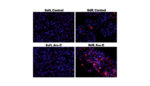
Researchers from the Wyss Institute developed a hydrogel microenvironment to evaluate how physical properties like stiffness of the extracellular matrix impacts the efficacy of chemotherapy. “To have success with chemotherapy and other drug therapies, we will likely need to screen their effectiveness against cells living in various environments, and not just assume that cells will always […]
Bioprinted 3D renal architecture recapitulates kidney function

Researchers from the Wyss Institute for Biologically Inspired Engineering at Harvard University have bioprinted a functional 3D renal architecture with living human epithelial cells. Previously, the team bioprinted tissue constructs made of living cells alongside a vascular network in an extracellular matrix. These constructs are functional in vitro for more than a month. “The current work […]
Engineered “building blocks” could form complex nano-structures

A team of researchers from the University of Melbourne have developed a method to turn particles into “building blocks” for complex nano-structures, according to a study published in Nature Nanotechnology. “Nano-objects are difficult to manipulate, as they’re too tiny to see directly by eye, far too small to hold, and often have incompatible surfaces for assembling […]
Researchers develop personalized 3D-printed vascular stents

Researchers from Northwestern University have developed a 3D-printed vascular stent that can be personalized to the patient, the school reported this week. The stents are made of a biodegradable, citric acid-based polymer that researchers could load with drugs to release slowly as the blood vessel wall heals. “Right now, the vast majority of stents are […]
Microchip imaging platform for roundworms could accelerate research

Researchers developed a microchip imaging platform to image-analyze thousands of roundworms simultaneously, according to the Cockrell School of Engineering at the University of Texas at Austin. This is the 1st large-scale, in vivo drug discovery platform using a whole animal model, the school reported. The study, published in Nature Communications, detailed a flexible, cellphone-sized chip with […]
Report finds ethosomes as promising transdermal delivery mechanism
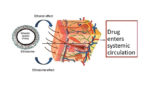
Ethosomes – nanocarriers loaded with ethanol – can penetrate the skin’s protective layers and deliver a variety of drugs, a review published in Current Clinical Pharmacology reported today. Transdermal delivery of drugs is touted by some researchers as promising, since it’s noninvasive and avoids any interaction with the gastrointestinal tract. Ethosomes are malleable and their […]
Nanoparticles deliver engineered protein to prevent joint damage

Researchers at Washington University have developed nanoparticles to treat the inflammation that wears away at joint cartilage in patients with osteoarthritis. Traditional treatment methods to reduce inflammation involve steroid injections, but the body quickly washes them away, leaving the cells vulnerable to more inflammation. “I see a lot of patients with osteoarthritis, and there’s really […]
‘Connectosomes’ efficiently deliver chemo to targeted cells
Researchers have developed a new form of nanoparticles called “connectosomes” that can efficiently deliver chemotherapy to human cells more efficiently than traditional delivery methods, according to a report out of the University of Texas at Austin. The team, who published their research in the Journal of the American Chemical Society, equipped the connectosomes with gap junctions […]
Motion-directed microrobots for targeted drug delivery

Researchers have created tiny ‘microbots’ that are able to move and react in a fashion similar to bacteria, according to a report from the Max Planck Institute for Intelligent Systems. Bacteria use flagella to move, directed by stimuli like sources of light or the earth’s magnetic field. Researchers have developed synthetic microrobots with motility and phototaxis, […]