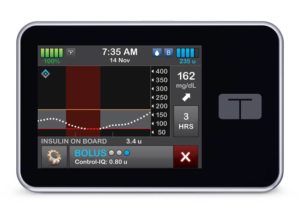
Tandem Diabetes Care (Nasdaq:TNDM) has shared new findings supporting the use of its Control-IQ technology in type 1 diabetes.
San Diego-based Tandem’s study aimed to assess the differences in time in range (TIR) between automated insulin delivery (AID) systems in youth with low bolus frequency. It compared Tandem Control-IQ technology with an undisclosed disposable patch-based AID system.
According to Tandem, with AID systems becoming the new standard of care for type 1 diabetes, many youth with low bolus frequency (≤3 per day) still struggle to maintain glucose levels within their target range.
Tandem said its study assessed clinical outcomes across 98 low-bolusing youths with type 1 diabetes. It compared the time in range across systems with similar low-bolus behavior.
According to a LinkedIn post, Tandem Control-IQ technology users achieved 16% more time in automation. This equals nearly four additional hours per day (80% vs. 64%) and 8% higher time in target glucose range compared with a disposable patch AID system without automatic bolus function.
“This study showed that among AID users with low bolus frequency, Control-IQ technology was associated with greater time in range. When bolus frequency is low, AID systems with automatic bolus delivery can make a meaningful difference and should be considered when choosing an AID system,” Tandem said on LinkedIn.
Tandem — one of the largest diabetes tech companies in the world — develops automated insulin delivery technology, including the flagship t:slim X2 pump and the miniature, durable Mobi pump. In addition to the previous-generation Control-IQ algorithm, the company now offers the Control-IQ+ predictive algorithm.