
Once again, continuous glucose monitors (CGMs) and automated insulin delivery systems took most of the headlines, as the leaders in the space keep building on their platforms while challengers continue to enter the fray.
Meanwhile, the industry saw some significant personnel changes, strategy shifts and one major planned separation.
At Drug Delivery Business News, we’ve been covering all of the large developments across the diabetes tech industry. Earlier this year, we released a Diabetes Tech Industry Special Report, sharing the biggest companies and the biggest news in the space. We also have a Medtech Market Report on the CGM industry available for purchase.
Along with those special reports, here are the five biggest diabetes tech stories from Drug Delivery Business News in 2025:
5. Embecta is shifting its strategy in a big way
 Since separating from BD as a standalone, pure-play diabetes company, Embecta (Nasdaq:EMBC) has faced its share of ups and downs.
Those include an FDA approval for a disposable insulin patch pump system in September 2024, only to be followed by the discontinuation of its insulin patch pump program. That led to a restructuring effort that resulted in the elimination of 118 positions in Massachusetts.
As part of the company’s continuing journey, it announced a strategy shift in May to better support its transition to growth. Through this, the Parsippany, New Jersey-based company plans to widen its reach.
While intending to remain as an insulin injection leader, Embecta aims to shift toward becoming a broad-based medical supplies company. With its core insulin injection business providing a stable, recurring and diversified revenue base, the company aims to continue to strengthen this area. It said today that it plans to execute “a seamless brand transition” while identifying opportunities to bolster its leadership in injection devices.
4. Abbott looks to pave the way with its dual glucose/ketone sensor
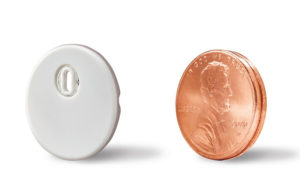
Over the course of the year, Abbott agreed to implement integrations with automated insulin delivery systems offered by Sequel Med Tech, Tandem Diabetes Care, Beta Bionics, then Ypsomed and CamDiab, highlighting the interest in the sensor within the diabetes technology world even ahead of commercialization.
A future launch of the dual monitor would only bolster the company’s wide range of diabetes management options. In addition to the leading FreeStyle Libre continuous glucose monitor (CGM) platform, Abbott also recently added the over-the-counter Lingo and Libre Rio devices to its offerings, while delivering the Instinct sensor in a partnership with Medtronic.
In June, Abbott EVP of Diabetes Care Chris Scoggins spoke to Drug Delivery Business News to outline the company’s plans for the new biowearable.
3. Change at the top for Dexcom as company addresses claims of CGM issues

The company said in July that it picked Jake Leach to take the CEO role permanently at the start of 2026 as part of Dexcom’s planned succession process, taking over for Kevin Sayer. Leach was thrust into the post early when Sayer took a leave of absence in September. After acting as interim CEO for the past three months, Leach will officially assume the role on Jan. 1.
As Leach takes over, he and Dexcom continue to grapple with recalls and legal action related to its CGMs. A recent class action lawsuit brought the G7 system into the spotlight, demanding a jury trial for claims that Dexcom’s representations for G7 were false, misleading, and deceptive to consumers. FDA recalls in June and September of this year are referenced in the lawsuit. The agency labeled both Class I, the most serious kind. These recalls came just months after the company faced an FDA warning letter as well.
Leach and EVP, CFO and Chief Accounting Officer Jereme Sylvain outlined the issues identified by G7 users and shared more information on Dexcom’s future on the company’s third-quarter earnings call. The company is also ceasing production of its previous-generation G6 in 2026, with a full transition to G7 and potentially future-generation devices.
Read the full story on Dexcom’s plans to address these issues.
2. Medtech veteran Ashley McEvoy takes over at Insulet

McEvoy spent decades across various roles at Johnson & Johnson MedTech, culminating in the post of EVP and worldwide chair of Johnson & Johnson MedTech. There, she led a business of 60,000 global employees with revenues totaling more than $30 billion.
Since taking over at Insulet, McEvoy has overseen continued growth, whether that be with the use of artificial intelligence, handling the competition that continues to heat up in the patch pump space, or launching new, consumer-focused initiatives like a Marvel superhero with diabetes.
With the company establishing market leadership through its Omnipod 5 platform for both type 1 and type 2 diabetes, it plans to enhance that offering and roll out new ones, too, while reaching wider populations of people with diabetes
McEvoy recently spoke to Drug Delivery Business News about Insulet’s future plans, which the company covered at its November Investor Day.
Read the full interview with McEvoy here.
1. Medtronic plans separation of Diabetes business
 In May, Medtronic announced that it planned to separate the Diabetes unit into a standalone, publicly traded company. In that announcement, the company projected the separation within the next 18 months.
By separating the business, the company seeks to create “a more focused Medtronic” with a more simplified portfolio in high-margin growth markets. At the same time, it creates an independent, scaled leader in diabetes, called MiniMed. Que Dallara, who leads the Diabetes unit, will be MiniMed’s CEO once separated.
On Medtronic’s first-quarter earnings call in August, Medtronic Chair and CEO Geoff Martha said the separation is “proceeding according to plan.” CFO Thierry Piéton today said during the company’s second-quarter earnings call in November that this remains the case. The company also has next-generation technologies in the works, according to that earnings call.
Since the announcement of the separation, Medtronic has reported a number of milestones, including updates to the MiniMed leadership team ahead of its shift to a standalone company, as well as the launch of its MiniMed 780G pump with the Instinct sensor made by Abbott.
The latest step toward that separation came this month, when the company filed with the SEC for a proposed initial public offering (IPO). It expects to complete the separation from Medtronic through a series of capital markets transactions. The company has a preferred path of an IPO and subsequent split-off.
Read the full story on the IPO here.
Other stories worth noting in 2025
- The biggest diabetes tech news out of ADA 2025
- ViCentra’s new CEO leads the company forward with next-gen patch pump
- Tandem advances automated insulin delivery offerings
- Beta Bionics has a patch pump in the works
- Senseonics takes over commercial efforts for Eversense CGM
- Sequel Med Tech launches twiist automated insulin delivery system
- PharmaSens and SiBionics combine CGM and pump in all-in-one device
- Glucotrack explains 3-year CGM implant device
- Modular Medical submits next-gen pump to FDA
- CeQur hits insulin pump milestone
- LifeScan emerges from Ch. 11