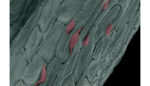
Researchers at the University of Wisconsin-Madison are aiming to create novel biomedical implants using 3D scaffolds made from the decellularized husks of parsley, vanilla and orchids. The team described their work in an article published in Advanced Healthcare Materials. “Nature provides us with a tremendous reservoir of structures in plants,” lead author Gianluca Fontana said in […]
Research & Development
Fibrosis: How to prevent it in medical device implants

Massachusetts Institute of Technology (MIT) and Boston Children’s Hospital researchers have discovered a way to prevent fibrosis from forming around medical device implants by blocking certain cells. The body’s immune system usually attacks implanted medical devices that are used for drug delivery, sensing or tissue regeneration. Defense cells in the body try to isolate the […]
These tiny jet engines could propel pharmaceuticals in the body
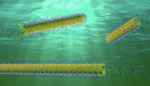
Researchers at the Max Planck Institute for Intelligent Systems in Stuttgart, Germany are creating nanorobot propulsion systems that could help transport pharmaceutical agents in the body. Two types of propulsion systems were created. One was powered by bubbles that are oscillated by ultrasound, while the other one was powered by an enzymatic reaction that would […]
Study: Tethered nanoparticles help trigger cell death in cancerous tumor cells
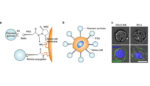
Researchers from the Massachusetts Institute of Technology have developed a way to amplify certain types of cancer treatment by tethering nanoparticles to cancerous tumor cells. The team’s work was published in Nature Communications. The researchers found that tethered nanoparticles increase the forces exerted on the cells by phenomena such as blood flow, therefore making the cells […]
Medtech stories we missed this week: March 17, 2017

The FDA awarded 510(k) clearance to a couple of medtech companies this week while others received tax breaks and incentives, including a local tax break for a $154 million Stryker R&D facility planned in Michigan. Here are some medtech stories we missed this week but thought were worth mentioning. 1. FirstRay wins FDA 510(k) clearance […]
Study: Vision loss treatment linked to higher risk of glaucoma surgery
Researchers from the University of British Columbia found that patients with age-related macular degeneration who had at least 7 eye injections per year had a heightened risk of having glaucoma surgery. The team’s findings were published this week in JAMA Ophthalmology. Patients with wet age-related macular degeneration and diabeteic macular edema, common causes of vision loss, are […]
Report: Increase in allergy auto-injector scripts, with little guidance on optimal use
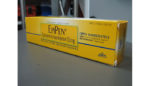
Prescriptions of emergency allergy auto-injectors have increased over the last decade, according to research published in the British Journal of General Practice, but there is little guidance for general practitioners on the optimal use of these devices. The most recent guidelines suggest that each child at risk of anaphylaxis should be given no more than 2 devices […]
Penn State researchers deliver melanoma drug combo using nanoparticles

Researchers from the Penn State College of Medicine developed a method to deliver a combination of drugs using nanoparticles in the hopes of preventing melanoma cancer cells from developing treatment-resistance. Their work was published in Molecular Cancer Therapeutics and Cancer Letters. The team’s CelePlum-777 localized around cancer tumors and delivered a specific ratio of an anti-inflammatory, Celecoxib, and a toxin, Plumbagin, […]
Scientists develop microjet device for needle-free vaccine delivery
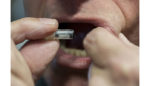
Researchers from the University of California Berkeley have developed a needle-free delivery device for vaccines. The team published their work in Science Translational Medicine. The MucoJet device is a pill that releases its cargo in a microjet when pressed up against the cheek. The pressure generated from pushing the device against the cheek is enough to […]
Researchers develop sweat-based glucose monitoring & maintenance device
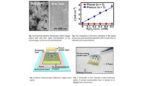
Researchers from the Center for Nanoparticle Research at the Institute for Basic Science have developed a sweat-based glucose monitoring and maintenance device. The team’s work was published this week in Science Advances. The sweat-based system rapidly measures glucose using small sensors and delivers a precise, controlled dosage of drug according to the device’s measurements, the team […]