 The biggest names in diabetes tech gathered in New Orleans last weekend for the American Diabetes Association’s 86th Scientific Sessions (ADA 2026).
Clinical findings supporting next-generation automated insulin delivery platforms, continuous glucose monitors (CGMs) and all kinds of other technologies were on display in New Orleans.
BTIG analysts Marie Thibault, Alexandra Pang and Sam Eiber say new trial data shared at ADA 2026 by Dexcom and Insulet, in particular, highlight tailwinds for diabetes technology adoption. They also say that patch pumps represented a significant part of the conversation, as multiple potential entrants — Beta Bionics, Tandem Diabetes Care and MiniMed, to name a few — look to compete with Insulet and its Omnipod 5.
“It is too early to determine what customers will prefer, but we think that as with all things diabetes, patients want ease-of-use, broad access, autonomy, and choice.”
Overall, the analysts left ADA 2026 bullish on the diabetes technology industry, thanks in large part to the findings shared at the event.
“We expect the diabetes technology segment to continue evolving quickly, with the competitive landscape ensuring frequent product iterations, and growing awareness and access from broader reimbursement, label expansions, and outreach,” they said.
Here are the biggest stories from ADA 2026:
Insulet data backs Omnipod 6, fully closed-loop AID systems

Findings demonstrated meaningful improvements in glucose control for people with diabetes using the investigational Omnipod 6 and a fully closed-loop system for type 2 diabetes.
Omnipod 6 represents the company’s next-generation hybrid closed-loop automated insulin delivery option for both type 1 and type 2 diabetes. It features an improved, adaptive algorithm that makes the pod even easier to use, while maintaining the same form factor as the current Omnipod 5. Insulet hopes to launch the system next year.
The Acton, Massachusetts-based company’s fully closed-loop technology for type 2 is expected to launch in 2028. Insulet initiated the EVOLVE FDA investigational device exemption (IDE) study for the technology last month. That came on the heels of positive data from the EVOLUTION 2 feasibility study evaluating FCL for type 2. The company hopes to further improve glycemic outcomes with less burden for users across diverse settings.
Read the full story from Insulet here.
Dexcom data backs CGM in type 2 as Nutrisense acquisition provides boost

Nutrisense’s offerings enable Dexcom to incorporate access to registered dietitians, personalized nutrition guidance and behavior-change support. It offers 24/7 glucose data and expert coaching designed to help cut cravings, boost energy and lose weight.
Meanwhile, data shared at ADA highlighted the benefits of CGM in people with type 2 diabetes not using insulin. The CONNECT study compared this population to a routine care control group using self-monitoring of blood glucose.
San Diego-based Dexcom said outcomes demonstrated that G7 use leads to clinically and statistically significant A1C reduction and improvement in glucose control in people with type 2 diabetes not using insulin.
Dexcom President and CEO Jake Leach also spoke with Drug Delivery Business News during ADA 2026 to explain the significance of the acquisition, the data and the recent unveiling of the next-generation G8 sensor system.
Read the interview with Leach here.
Read the breakdown of the CONNECT study data here.
Sequel Med Tech data supports twiist pump in type 2 diabetes

twiist, which works with the twiist Loop algorithm, powered by Tidepool, directly measures the volume of insulin delivered with every microdose. The system offers the capability and flexibility to address each patient’s individual dosing needs. Sequel’s system utilizes sound waves that measure each pulse of insulin. This enables precision and helps understand exactly how much insulin the patient receives in a dose.
Manchester, New Hampshire-based Sequel currently offers twiist for type 1 diabetes, launching earlier this year. Findings demonstrated significant improvements from baseline by measuring HbA1c and time in range over 13 weeks. The study also saw zero severe hypoglycemia events reported. Sequel said its trial reflects its commitment to expanding access to AID for everyone who can benefit.
Chief Medical Officer Dr. Joanna Mitri also took part in a Q&A with Drug Delivery Business News to further illustrate the significance of Sequel’s recent milestones.
Read the Q&A with Dr. Joanna Mitri here.
Read the details of the Sequel Med Tech study here.
Senseonics study supports Eversense 365 CGM with automated insulin delivery tech

Eversense 365 is a 365-day implantable continuous glucose monitor (CGM) that rests under the skin for the duration of a year. Users can change its external, silicone-based adhesive daily with almost no skin reactions.
Germantown, Maryland-based Senseonics said data revealed sustained accuracy, performance and positive impact with Eversense 365 in both open-loop and closed-loop automated insulin delivery systems.
The extended real-world analysis dataset looked at the first 12,360 Eversense 365 sensors among open-loop users and an additional 153 closed-loop users, with the CGM used as part of the Sequel Med Tech twiist automated insulin delivery system, for more than 30 days. Senseonics and Sequel launched the pairing earlier this year.
Read more about the performance of Eversense 265 here.
Abbott studies reinforce DKA opportunity

Abbott says its dual sensor marks a world first, continuously measuring glucose and ketone levels every minute. Branded as Libre Duo and Libre Duo 10 Day, the sensors provide real-time visibility into glucose levels as a standard CGM like Abbott’s FreeStyle Libre system does, but also into rising ketones that can lead to a DKA emergency.
At ADA, Abbott’s studies covered hospitalization, admission diagnosis and insurance claims to better understand the challenges in identifying DKA. The company aimed to evaluate the condition’s rising impact in young people and growing prevalence in adults with type 2 diabetes.
Abbott said a study of more than 100,000 people across the U.S. found DKA difficult to recognize when a person first arrives at the hospital.
Read the full details on the DKA impact here.
MiniMed showcases next-gen technology
 MiniMed’s ADA 2026 included putting its latest insulin delivery systems on display.
First, the company showcased MiniMed Flex, a discreet, smartphone-controlled insulin pump that it designed to seamlessly fit into everyday life. The MiniMed Flex (8 series) pump is much smaller than the previous-generation 780G (about half the size), allowing for more discrete placement while still using the same reservoirs and infusion sets.
MiniMed won FDA clearance for the next-generation pump in March.
The company also put the spotlight on MiniMed Go, a connected smart multiple daily injection (MDI) system.
The smart MDI system integrates the InPen smart insulin pen with the Instinct sensor made by Abbott. It all integrates within a mobile app to deliver real-time, personalized insights and actionable guidance. The platform targets people living with diabetes who manage their condition using MDI, simplifying insulin management without adding complexity to daily life.
MiniMed won FDA clearance for the integrated offering in January and launched it last month.
Read more about MiniMed Flex here.
Read more about MiniMed Go here.
Tandem findings back automated insulin delivery in pregnancy
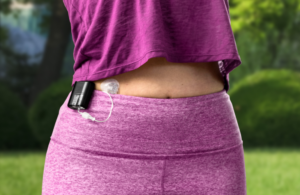
San Diego-based Tandem can now bring its Control-IQ-powered AID systems — the flagship t:slim X2 and miniature Mobi — to European adults with type 2 diabetes and those with type 1 diabetes during pregnancy. Approval in Europe follows FDA nods for type 2 in early 2025 and for pregnancy just over a month ago.
For its approval in pregnancy, the company used findings from its CIRCUIT trial, published last fall. Findings demonstrated 12.6% more time in the pregnancy glucose target range (63-140 mg/dL), approximately three hours more per day, compared to those on standard therapy from 16 weeks gestation to the end of pregnancy.
The company also shared findings supporting the use of its technology during pregnancy at ADA 2025.
Read more about the regulatory nod here.
Beta Bionics real-world data shows 25% time in range improvement with iLet

iLet, Beta Bionics’ flagship AID system, allows users to “go bionic,” requiring no carb counting or insulin correction calculations. Then, iLet determines 100% of the insulin doses throughout the day. The only input required to get started is the user’s weight. Beta Bionics also has the Mint patch pump under development with a launch expected next year.
The company recently announced the public availability of near-real-time, real-world iLet Bionic Pancreas data through its online dashboard as well, highlighting the relevance of the findings shared at ADA 2026.
Post-market surveillance data covered the real-world population from the first three years of iLet usage. It spanned from May 19, 2023, to May 19, 2026.
Read more about the iLet data here.
MannKind data backs inhaled insulin
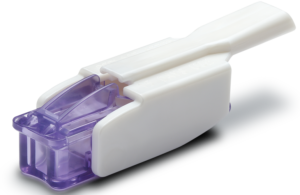
Afrezza (insulin human) inhalation powder is a fast-acting insulin formulation delivered through an inhaler device. The company’s its proprietary Technosphere drug delivery platform enables the rapid absorption of insulin into systemic circulation. The ultra-rapid-acting inhaled insulin taken when eating more closely mimics the body’s natural insulin response at mealtime.
Furoscix is the company’s on-body infusor for treating edema associated with chronic heart failure (CHF) and chronic kidney disease (CKD) in adults.
MannKind shared a post hoc analysis from its INHALE-1 study assessing treatment satisfaction among pediatric Affreza patients. Those treated with inhaled insulin reported statistically greater improvements in treatment satisfaction compared to rapid-acting analogs (RAA).
The company just last month expanded Afrezza’s availability with FDA approval for children with diabetes.
Read more about the MannKind data here.
Terrestrial Bio data backs needle-free patch for GLP-1 delivery
 Terrestrial Bio marked ADA 2026 with study findings demonstrating the translatability of its patch technology for delivering GLP-1 therapies.
Outcomes showed the translatability of the proprietary Tacterra MAP platform to deliver next-generation obesity therapies that involve co-delivery of an amylin analog and a GLP-1 receptor agonist (GLP-1 RA).
The company’s microarray patch (MAP) technology features a soluble microarray with tips that gradually dissolve into the body after removal. These tips release their payload of therapeutics over time, mimicking how natural infections interact with the body.
In its study shared at ADA 2026, Terrestrial used CagriSema. The combination of GLP-1 RA semaglutide and amylin RA cagrilintide served as a model to evaluate in vitro and in vivo performance. Investigators delivered MAP and injections in Göttingen minipigs.
Read the details of the Terrestrial Bio study here.
Adaptyx study backs wearable multi-analyte sensor
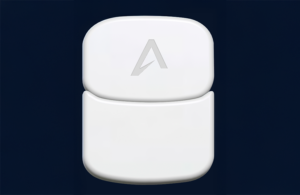
The studies looked at the sensor measuring free cortisol from dermal interstitial fluid in two first-in-human studies. One looked at a controlled oral hydrocortisone challenge, in which the wearable signal tracked paired venous blood measurements. The other evaluated overnight monitoring that captured the body’s own cortisol rhythm during normal daily activity.
Adaptyx looks to measure cortisol as the hormone impacts “every major organ system,” according to Vijit Sabnis, co-founder and CEO. Sabnis says downstream effects of cortisol include diabetes, hypertension and depression.
The Adaptyx sensor uses a 16-channel array that incorporates eight cortisol-specific molecular switches and eight control channels. Its molecular switches comprise synthetic DNA structures that change shape when they bind a target molecule. This generates an electrical signal measurable through a wearable sensor.
Read more about the wearable sensor here.
Biolinq data backs autonomous, needle-free CGM

San Diego-based Biolinq develops the Shine sensor, which integrates glucose, activity and sleep information into a single device with autonomous operation. The first-of-its-kind system utilizes a patch on the forearm to provide real-time glucose feedback through a primary color-coded LED display, visible with or without a phone. Users can access additional insights for activity and sleep trends through a mobile app.
Shine won FDA de novo clearance in September 2025.
Dr. Timothy Bailey, an associate professor of medicine at the University of California at San Diego, presented the findings at ADA 2026. Biolinq’s study aimed to evaluate the novel, fully autonomous microneedle array sensor for real-time glucose ranges.
Read more about the needle-free CGM’s performance here.
Tidepool data highlights automated insulin delivery algorithm enhancements
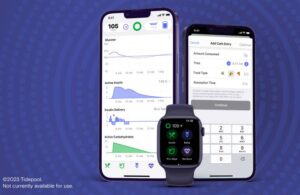
The company shared real-world data and research related to closing gaps in women’s health. It says findings demonstrate sustained progress in the adoption of accessible, data-driven diabetes management.
One study looked within a resource-limited healthcare setting supporting adults with uncontrolled type 2 diabetes. Investigators used continuous glucose monitoring (CGM) data streamlined through Tidepool’s TIDE clinical dashboard.
The study used a remote patient monitoring framework. The care team efficiently prioritized weekly outreach to patients requiring immediate support or education. They achieved a 1.59% reduction in HbA1c and a 13.4% increase in time in range.
Read more about the Tidepool findings here.